The Tug of War Between Natural Diamonds and LGDs
The global diamond industry is undergoing a major transformation, marked by a growing competition between natural diamonds and lab-grown diamonds (LGDs). What started as a niche technological breakthrough has quickly become a significant market force, influencing consumer perceptions, pricing strategies, and marketing approaches across the gemstone and jewelry sectors.
For over a century, natural diamonds have symbolized rarity, romance, and lasting value. Their formation deep within the Earth over billions of years has been central to their allure. The global narrative—shaped by marketing efforts from companies like De Beers—associates diamonds with key emotional milestones, especially engagements and weddings. This has fostered a perception of natural diamonds as timeless and irreplaceable.
The advent of lab-grown diamonds has challenged this status quo. Created through advanced methods such as Chemical Vapor Deposition (CVD) and High-Pressure High-Temperature (HPHT), LGDs are chemically and physically identical to natural diamonds but are produced in laboratories within weeks—not billions of years.
The main benefit of LGDs is their cost advantage. They can be priced 60–80% lower than similar natural diamonds, appealing particularly to younger, budget-conscious buyers. In the U.S., LGDs have already gained significant market share in the engagement ring segment, especially for stones in the one- to two-carat range.
Beyond price, LGDs are often marketed as a more sustainable and ethical option. As awareness of environmental and social issues increases, many brands promote lab-grown diamonds as a modern, responsible choice aligned with changing consumer values.
However, LGDs face challenges, notably in retaining value. Unlike natural diamonds—whose supply is naturally limited—lab-grown diamonds can be produced in unlimited quantities as technology advances. This has led to sharp price declines in the LGD market, raising concerns about the long-term value of LGD.
On the other hand, natural diamonds maintain a distinct emotional and rarity-driven appeal. Many consumers associate owning a gemstone formed billions of years ago deep within the Earth with authenticity and legacy—qualities that laboratory-produced diamonds cannot replicate.
The industry’s response to this competition varies. Companies like De Beers have created separate brands like Lightbox Jewelry for lab-grown diamonds to clearly differentiate the categories. Meanwhile, industry organizations such as the World Diamond Council and the Natural Diamond Council continue to emphasize the rarity, heritage, and emotional significance of natural diamonds.
In India, the world’s leading diamond cutting and polishing hub, this rivalry presents both risks and opportunities. Cities like Surat are centers for both natural and lab-grown diamond production. While LGDs have opened new growth and employment avenues, they also increase competitive pressures within the traditional natural diamond sector.
Ultimately, the industry’s future may lie in clearly positioning both categories rather than choosing one. Natural diamonds embody rarity, heritage, and emotional permanence, whereas lab-grown diamonds provide affordability, innovation, and accessibility.
The key challenge is narrative. The segment that presents its story most convincingly will shape the next phase of the global diamond market.
Tags
Rajesh Bajaj insights | Luxury market trends | Jewelry industry analysis | Watch sector overview | Heera Zhaveraat leadership | Industry expert opinion | Global luxury market trends | Trade event highlights















Offical Facebook account of heerazhaveraat.com, homepage for Trade News, Articles and Promotion of D











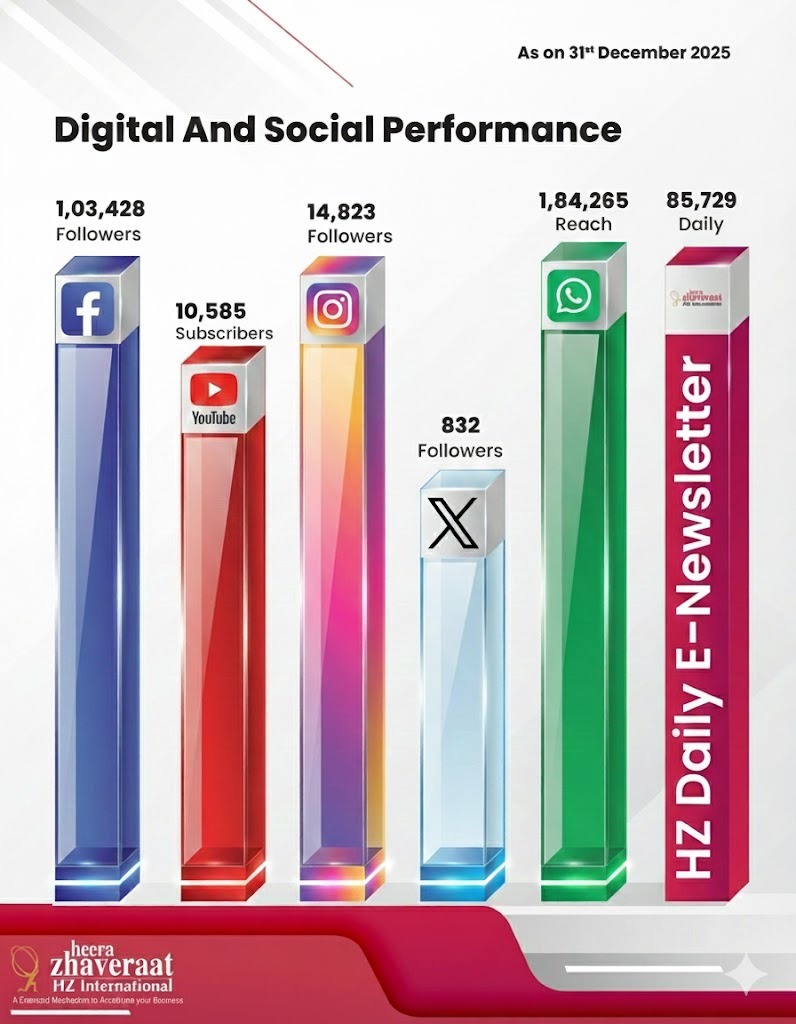
Heera Zhaveraat (HZ International) A Diamond, Watch and Jewellery Trade Promotion Magazine provide dealers and manufactures with the key analytical information they need to succeed in the luxury industry. Pricing, availability and market information in the Magazine provides a critical edge.