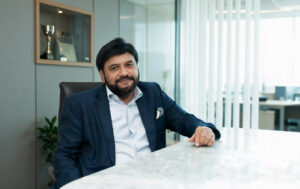
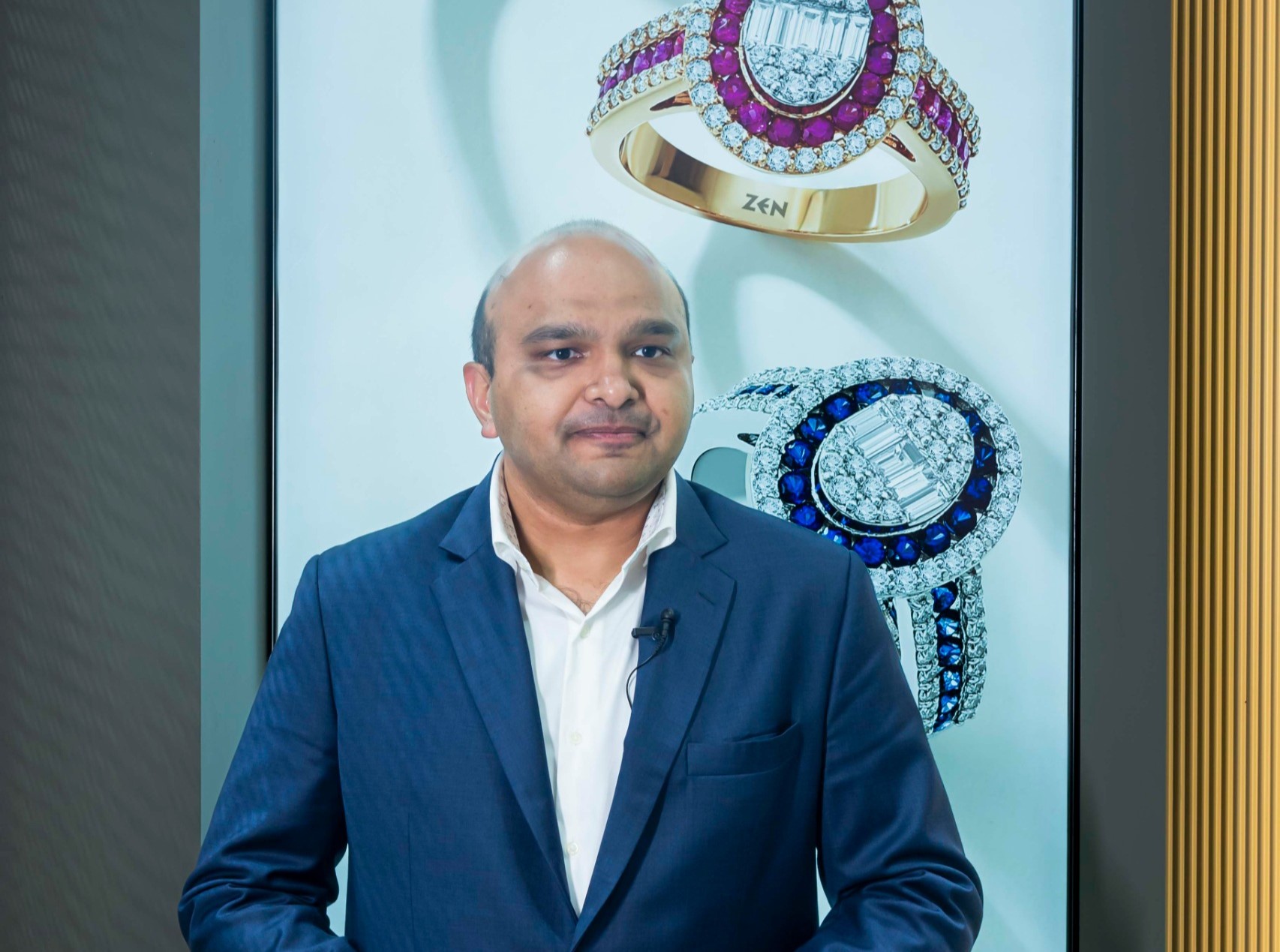
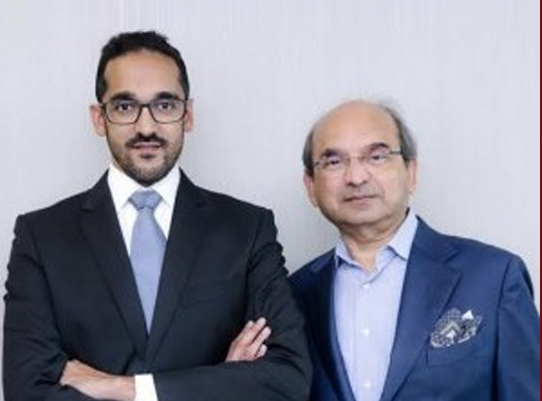
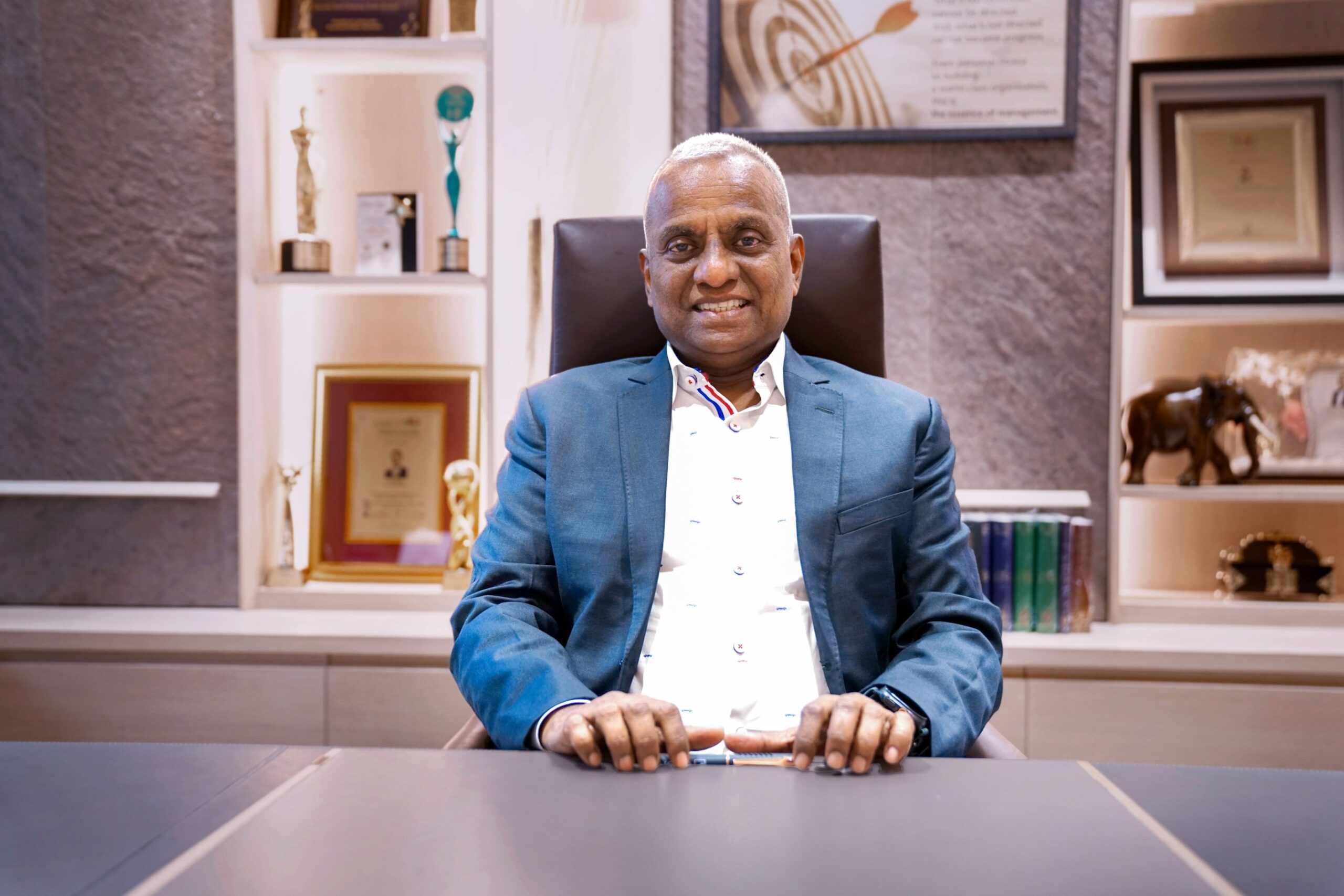
 – SANJAY KOTHARI, Vice Chairman, KGK Group
1) KGK Group has evolved into a vertically integrated global enterprise. How do you define your leadership philosophy in steering such a diverse multinational organisation?
For me, leadership begins with clarity. When an organisation operates across countries, cultures and different parts of the value chain, people need to understand not only what they are expected to achieve, but also why it matters.
I prefer to give our teams a clear direction and then empower them to make decisions suited to their respective markets. What works in Hong Kong may not necessarily work in India, Botswana, Thailand or the United States. Local understanding is therefore extremely important.
At the same time, certain fundamentals must remain consistent across the Group: quality, accountability, respect for people and a long-term approach to business. My role is not to control every decision. It is to ensure that our businesses move in the same direction while giving capable people the freedom to lead.
KGK’s vertically integrated model, spanning sourcing, manufacturing, distribution and retail, also gives us a wider understanding of the industry and helps different teams learn from one another.
2) In a legacy-driven industry like gems and jewellery, how do you strike a balance between tradition and transformation?
Tradition gives us our foundation, while transformation allows us to remain relevant.
The gems and jewellery business has always been built on relationships, knowledge, patience and trust. These values should never become outdated. However, the way we design, manufacture, communicate and engage with customers must continue to evolve.
I do not see tradition and technology as opposing forces. Technology can improve precision, transparency and efficiency, but it cannot replace human judgement, especially in an industry where every gemstone and diamond has its own characteristics.
The balance lies in preserving the values and knowledge passed down through generations while remaining open to new ideas. We should respect the past without becoming restricted by it. Legacy is meaningful only when every generation adds something valuable to it.
3) How do you see the global diamond and jewellery industry evolving in the face of changing consumer preferences and technological disruption?
The industry is becoming more consumer-led. Earlier, jewellery buying was largely occasion-driven and influenced by tradition. Today, consumers are more informed and more expressive. They want to understand the story, origin and value of what they are purchasing.
Technology will continue to influence every stage of the business, from diamond detection and manufacturing to inventory management, personalisation and retail experiences. Digital platforms have made discovery easier, but jewellery remains an emotional purchase. The physical experience, human interaction and confidence in the seller will remain important.
We will also see clearer positioning across natural diamonds, lab-grown diamonds, coloured gemstones and different jewellery categories. Each segment has its own consumer and value proposition. The responsibility of the industry is to communicate these differences transparently.
4) How do you view India’s position in the global gem and jewellery value chain today, and what more needs to be done to strengthen its leadership?
India is already one of the most important centres of the global gem and jewellery industry. Its strength comes from generations of expertise, a highly skilled workforce, entrepreneurial ability and a well-established manufacturing ecosystem.
The next step is to move further up the value chain. India should not only be recognised as a major manufacturing and processing destination, but also as a global centre for design, innovation, technology and jewellery brands.
We need to invest more deeply in product development, modern manufacturing, professional education and international marketing. Indian companies should build stronger consumer-facing identities and create products specifically for different global markets rather than adopting a single approach everywhere.
Market diversification is equally important. Depending too heavily on one export destination creates vulnerability. India’s export performance during FY 2025–26 demonstrated the importance of broadening markets and product categories amid tariff changes and geopolitical uncertainty.
5) What role is digital transformation playing within KGK’s manufacturing and retail operations?
Digital transformation is helping KGK create greater visibility, efficiency and agility across its value chain. In manufacturing, technology supports production planning, quality control, inventory management and better coordination across locations.
Artificial intelligence is further strengthening this by improving demand forecasting, identifying process gaps and enabling more informed decisions. At the retail level, digital tools and AI help understand customer preferences, personalise engagement and make the buying journey smoother.
However, jewellery remains an emotional and trust-led purchase. The role of technology is not to replace human expertise or personal interaction, but to enhance both. For KGK, digital transformation is therefore an ongoing effort to combine data, technology and experience to serve the market more effectively.
6) What policy reforms would you recommend to enhance India’s competitiveness in the global gems and jewellery market?
The industry requires a policy environment that is stable, simple and aligned with the realities of global trade.
The first priority should be greater predictability in duties and taxation. Frequent changes make long-term planning difficult, particularly when businesses work with high-value raw materials and operate on tight margins.
Customs processes should become faster and more digitally integrated. Jewellery and gemstones often move internationally for exhibitions, certification, repair or customer approval, so delays can significantly affect competitiveness.
Exporters, especially smaller manufacturers, also need better access to working capital. Beyond this, India should continue pursuing trade agreements that provide improved market access while investing in design education, technology, skilling and internationally accepted traceability systems.
Recent customs reforms, simplified clearances, expanded courier-export provisions and support for digital appraisal are positive developments. Continued rationalisation of duties on key inputs and stronger liquidity mechanisms would further help the industry compete globally.
7) What shifts are you observing in consumer buying behaviour across KGK’s key international markets?
Consumers are becoming more individualistic in their choices. They do not necessarily want to buy what everyone else is buying. They want jewellery that reflects their personality, lifestyle or personal story.
In mature markets, customers increasingly ask about origin, authenticity, quality and responsible business practices. They research before visiting a store and often enter the purchase journey with a fairly clear idea of what they want.
Across Asian markets, we are seeing growing interest in self-purchase, contemporary designs and jewellery that can be worn more frequently. In the Middle East, there continues to be appreciation for distinctive design, fine workmanship and statement pieces. In India, the emotional and cultural importance of jewellery remains strong, but younger buyers are experimenting with lighter, more versatile formats.
The common thread across markets is that consumers want greater transparency, relevance and choice. Businesses must listen more carefully instead of assuming that traditional buying patterns will remain unchanged.
8) What has been the most defining leadership lesson in your journey with KGK Group?
The most defining lesson has been that sustainable growth depends on people and a strong value system. Strategies, infrastructure and technology are important, but their success ultimately rests on individuals who feel trusted, respected and connected to the organisation.
At KGK, integrity, ethical conduct, accountability and long-term relationships have always guided the way business is done. These values provide clarity, particularly when navigating difficult decisions or uncertain market conditions.
Another important lesson has been the value of patience. Investments may take time to deliver results, relationships take years to build, and reputations take even longer. Leadership, therefore, requires patience without complacency and an unwavering commitment to excellence in execution.
9) What advice would you offer to young entrepreneurs aspiring to enter the gem and jewellery business?
My first advice would be to learn the product thoroughly. This is not a business where surface-level knowledge is enough. Spend time understanding gemstones, diamonds, manufacturing, pricing and the behaviour of different markets.
Secondly, protect your credibility. Opportunities may come and go, but your reputation will remain with you throughout your career.
Young entrepreneurs should also be disciplined about inventory and cash flow. In this industry, it is possible to appear successful while carrying too much stock or financial exposure. Sustainable growth is more important than rapid expansion.
Finally, stay curious. Learn technology, understand branding and travel to different markets. At the same time, remain humble enough to learn from experienced artisans, traders and customers. Knowledge in this industry is spread across many people, not contained in one place.
10) How do you envision the KGK legacy evolving for the next generation?
I would like the KGK legacy to evolve from a successful family-led business into an institution that can continue to grow across generations.
The next generation will inherit a strong foundation, but it should not feel obliged to follow exactly the same path. Every generation must understand the values of the organisation and then find its own way of contributing.
Going forward, the Group should become more professional, more technology-driven and even more globally connected. We must continue strengthening governance, developing leadership from within and giving professionals meaningful opportunities to shape the organisation.
Most importantly, growth should create value beyond the balance sheet. Our businesses should contribute to skills, employment and the communities in which we operate. That is how a legacy remains relevant: not by simply preserving what was created, but by expanding its purpose.
RAPID-FIRE ROUND
1) One quality you admire most about the gems and jewellery industry?
Its resilience. The industry has faced many economic cycles, yet it continues to adapt and move forward.
2) One drawback of the industry you would like to improve?
Its fragmented nature. Greater collaboration and transparency would benefit everyone.
3) Your strength?
The ability to remain calm, adapt effectively to change and maintain a long-term perspective.
4) Your weakness?
At times, my pursuit of perfection leads me to become overly involved in the details to ensure everything is executed to the right standard.
5) Business at the cost of principles or principles at the cost of business?
Principles come first. A business can recover from a financial loss, but recovering lost credibility is much harder.
6) Describe yourself in a nutshell.
Grounded, curious and persistent, with a constant desire to learn and a keen eye for detail.
7) Your source of inspiration?
My father, Shri Navrattan Kothari. His discipline, simplicity and commitment to relationships have shaped the way I look at business and life.
8) What opportunities do you foresee?
Strong opportunities in branded jewellery, coloured gemstones, responsible sourcing, technology-led manufacturing, emerging markets and personalised customer experiences.
9) What major remedial measure would you adopt to overcome a difficult economic situation?
Protect liquidity, control inventory and remain close to customers. Difficult situations require quick decisions, honest communication and a sharp focus on the fundamentals.



















Offical Facebook account of heerazhaveraat.com, homepage for Trade News, Articles and Promotion of D
BDB completes 16 years of operations — marking 16 years of growth, collaboration, and continued commitment.
We are honored to have Mr. Pierre Steverlynck, Consul General of Belgium, and Mr. Swapnil Thorat , RPO Mumbai grace this special occasion with their presence.
BDB completes 16 years of operations — marking 16 years of growth, collaboration, and continued commitment.
We are honored to have Mr. Pierre Steverlynck, Consul General of Belgium, and Mr. Swapnil Thorat , RPO Mumbai grace this special occasion with their presence.
✨ Crafting New Expressions of Luxury ✨
@GJEPCIndia and @TheLeelaHotels have signed an MOU to launch exclusive hospitality benefits and special offers for GJEPC members! 💎🏨
#GJEPC #TheLeelaHotels #GJEPCIndia #Luxury #HeeraZhaveraat







Heera Zhaveraat (HZ International) A Diamond, Watch and Jewellery Trade Promotion Magazine provide dealers and manufactures with the key analytical information they need to succeed in the luxury industry. Pricing, availability and market information in the Magazine provides a critical edge.